
May 2015
No money, no network, no plan B
I founded division5 at 23, with no connections, no money, no references and no experience. My plan lasted until the money ran out, which did not take long. The only way to keep the company alive was to sell software development services, so that is what we sold.
The first eight years
Trying to escape
Once we were solvent I kept trying to pivot into a product. Every attempt pulled attention away from the business that was paying salaries, and none of the products got far enough to matter. I call it cheating on your business, because looking back, that is what it was.
Six years in
The bottleneck had my name on it
Clients were attached to me rather than to the company. Every proposal and every difficult call queued behind me, and I read that as being essential. It was the opposite. Founder dependency is not a property of services. It is a stage, and you build your way out of it with systems.
2022
Writing it all down
We captured how the work actually gets done and built it into how new people learn, so someone leaving became a setback instead of a hole.
2025
Putting AI underneath it
I started divisionAI to put software underneath that operation, with AI inside it rather than bolted on the side. In November 2025 division5 moved onto one system, and the first AI agents followed in April 2026.
Today
What it became
division5 is a marketplace that connects vetted AI-native engineers across the Balkans with companies in Europe and beyond. Agents now do most of the assembly work, and a person still makes every call that leaves the building.
What I know
What eleven years taught me first-hand
AI agents in business operations
I run agents inside my own companies, not in a demo. At division5 more than 85% of our processes now run on agents and automated workflows, and a person still approves everything that leaves the building. divisionAI builds the same systems for other companies.
Talks on AI in operations →Building software engineering teams in Albania and Kosovo
I have been building engineering teams in Albania since 2015, first for division5’s own client projects and now as a marketplace that vets AI-native engineers across the Balkans for companies in Europe and beyond.
division5 ↗Scaling service businesses
I spent eight years as the bottleneck in my own service business before learning how to take myself out of it. The playbook and the AI Integration Sprint are the diagnostics that came out of that.
The free playbook →The Albanian tech ecosystem
Albania exports its best people, and everything I build is a bet that it does not have to: companies in Tirana that meet a world standard, so young engineers can grow into senior work without boarding a plane.
The Silicon Valley Illusion →Written about me
- Services over products? This Albanian entrepreneur explains whyHis case that the Balkan tech scene imported the startup model, and that services are the path the region has been ignoring.
- For This Albanian Entrepreneur Stubbornness Is Key to SuccessA feature on founding division5, the road from rock bands to software and games, and building startups in Albania.
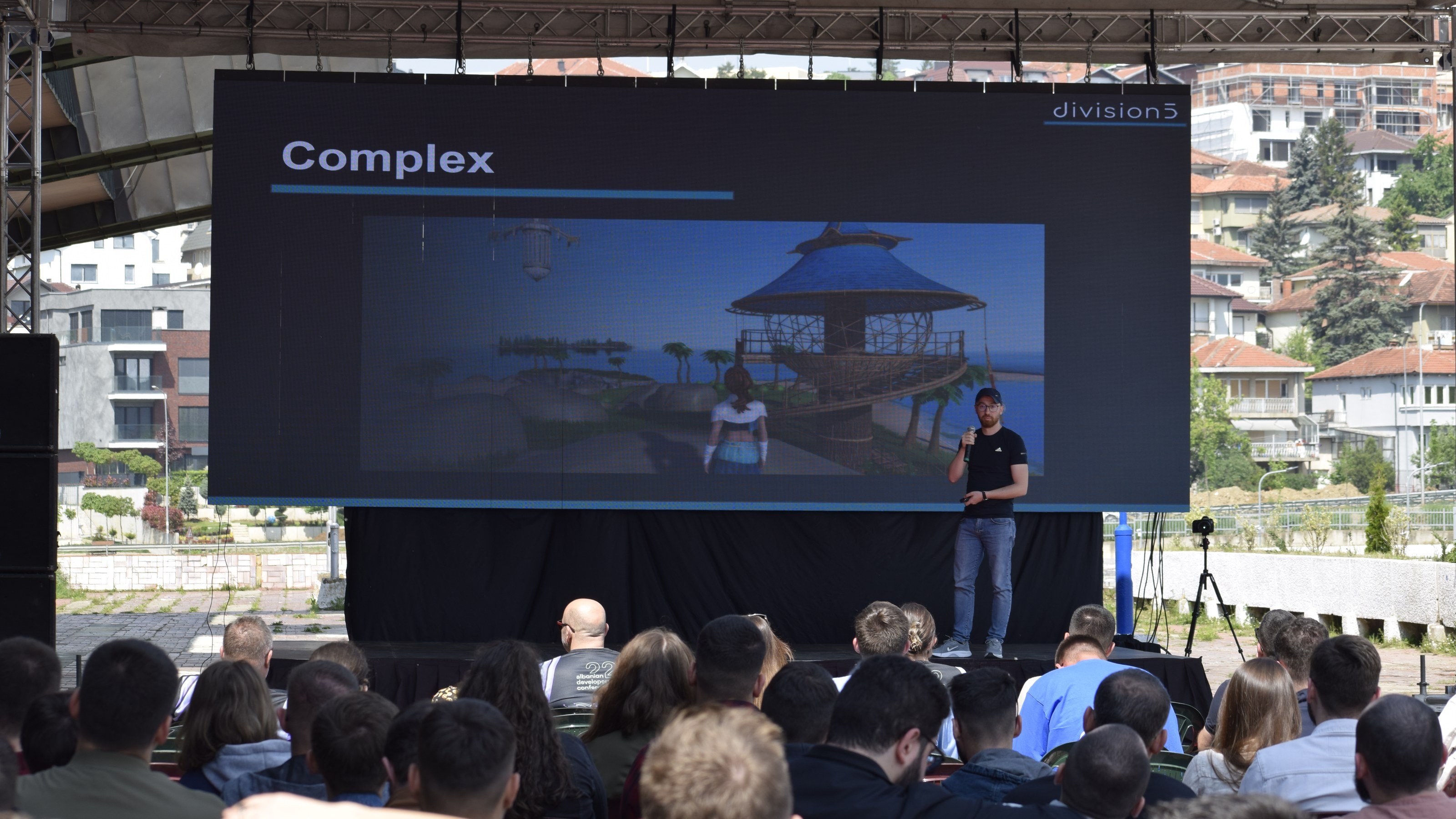
Why I build in Albania
Albania exports its best people. Everything I build is a bet that it does not have to.
A young engineer here should not have to choose between the career they want and the country they are from. Build companies here that meet a world standard, and they no longer have to. That means real projects, senior people to learn from, and the structure to grow into senior work without boarding a plane.
What I hold to
Four things I learned the slow way
Kindness
Kindness is leverage, not softness. A satisfied client pays the invoice. A client who trusts you brings you the next three.
Persistence
Stay with one thing long enough and it compounds. Change direction and you start from zero, carrying nothing forward.
Discipline
Write it down. Every time the company was stuck, the thing blocking it existed only in my head.
Patience
Cash flow is the measure, not a funding announcement. A decade of compounding beats a decade of pivoting.
If this sounds like your company, start with the playbook.
It is the same diagnostics I run with leadership teams, written so you can do them on your own.